Tuesday, 31 March 2015

The seeds are swelling


The rain was late arriving and seems to have finished early, there is great concern for the subsistence maize farmers.
Despite the difficulties of the climate, our seed crops have matured well. The maize foliage is showing signs of stress but the cobs have swollen.  Harvesting the cow peas, has started and the pigeon peas, the last crop to be planted, are in flower


Maize crop drying out
Good full cobs for seed

A proud farmer
These racks are used to dry fish or maize cobs

Creative and inventive neighbours

The lake sand is used as a medium for writing and drawing lessons, the children create gardens using wild flowers which are many and various.
                                                                              
School children learning in the sand


Children making a 'garden'


Music is an important part of life.
        
Bottle tops on wire, a percussion instrument

Some fishing boats travel into deeper water with the help of sails.

Sail made from old sacks
Likoma Island

An early birthday treat for Ian was a trip to Likoma Island, situated in the  Mozambican waters of Lake Malawi.  The Island is the site of an Anglican mission dating from 1886, the legacy of which is St Peters's Cathedral built of local granite in 1903.  We visited on Palm Sunday enjoyed part of the service and checked the bells which resembled upturned saucepans.

Transport to Likoma


Airport transfer, Ian in the back


Children at Likoma Mission,  St Peter's Cathedral, waving palms


There were only 2 other tourists on the island.

Easter is fast approaching, Easter eggs are not an option here but we will celebrate with boiled eggs for breakfast.

Happy Easter
T and I

Saturday, 14 March 2015

Picking the first green maize


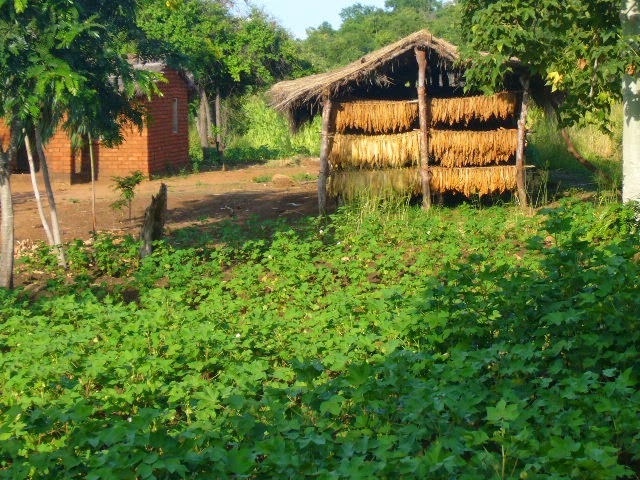
Our neighbours grow tobacco and cotton as cash crops. The tobacco leaves are picked and dried under thatched shelters and sold from April onward; the cotton is beginning to flower.

Brown tobacco leaves drying with cotton in the foreground
Moisture is necessary to ensure pollen grains stick to the silks of the maize cobs, if the weather is dry, the silk is hand sprayed with water.

In addition to maize Funwe produces a variety of legume seeds including cow peas and pigeon peas; both fix nitrogen and provide a source of protein which is eaten fresh, dried and sprouted.  These varieties are drought resistant and grow on marginal soils


We enjoyed this cob for dinner
Cow peas ripening fast


Village walk

Our cottage is in Mwanyama Village situated on the lake shore at Nkhudzi Bay.  It is a busy fishing village with a selection of community buildings, bars and several churches.  There is always great activity, mending nets, weaving mats and new builds.


The floats on this fishing net are discarded flip flops
There is little regard for health and safety


Christina taught Terri to weave grass into a very serviceable mat


Sunday morning

There are few tourists in Malawi as there are no direct flights from Europe, however there are a number of resorts along the lake shore which boast quality facilities including pools, tennis courts and golf courses.

Ian and Jon at Club Makokola Resort


We look forward to visitors over the next few weeks, Richard from Edinburgh followed by Jonny and Jody in mid April, we will enjoy their company.

T and I

Friday, 27 February 2015

The crops are flowering


The maize is tasseling and the cobs are forming; in order for cross pollination of the hybrid varieties to take place some tassels are removed by hand.


Maize tassel (male flower)
Fred removing tassel flower  


The female cob grows silk on which the pollen falls to fertilize the seeds.  The high yielding hybrid varieties produce 2 cobs per plant,


Shopping

We are surrounded by traders, prices are very reasonable and shop fronts colourful and attractive.  There are big supermarkets in the cities, the markets and trading posts line the roads. 

Shop names are descriptive and entertaining.

This is where we buy our beans.

Mr Ndala will find anything from a USB cable to a watch batter (30p)                     


The older girls wrap themselves in colourful kitenge prints.


 Time Off
Terri has the Horticulture Correspondence College RHS Level 2 resource material which occupied a good proportion of Nicola and Steve's weight allowance.  Many happy hours will be spent learning all matters horticultural.

The first of 2 huge lever arch files.


Roger, Terri's brother, a beekeeper from Aberystwyth tells us his bees are flying and foraging, this is indeed a sign of Spring in the Northern Hemisphere.
T and I


Friday, 13 February 2015

The growing season continues

We have been short of power over the past few weeks and use of the internet has been limited, however we are now in our second day of everything working!

The maize and groundnuts are beginning to flower with small cobs forming on the maize and tiny groundnuts visible. Apart from some flood damage the crops are looking well and fairly weed free.


 Maize planted Christmas week

 Maize planted early January


Peanuts growing on ridges
Yellow peanut flowers


The population of Malawi has increased 4 fold since independence in 1964, most of the 16 million+ people live in the rural areas and the economy is based on agriculture. The main cash crop and chief export from the country is tobacco accounting for 70% of export revenue. The land has been heavily cultivated and deforested.  Soil erosion has become a threat tackled by tree planting and education programmes.
Charcoal burning


Charcoal is the preferred cooking fuel, this is made by slow burning of logs cut from the forests piled under soil and vegetation, further deforestation, but necessary for survival.


Nkhudzi Bay Full Primary School
Our cottage is at Nkudzi Bay where the children are fortunate, there is a school and several village pumps, some families walk miles for education and water.  Resources are very limited however the staff are dedicated and enthusiastic. Terri has been helping with English following the Malawi Primary School Syllabus.

This class has no desks but they are keen and happy
Pumping water for hand washing at school


This is Terri's Standard 8 (age 14+) English class


 First Visitors
Malawi is full of interest and surprises.  Our daughter Nicola and her husband Steve visited for 2 weeks; they travelled, kayaked, viewed game and enjoyed our stunning lake shore surroundings.  They left for Ethiopia and more of Africa; we were sorry to see them go and thoroughly enjoyed their company.

Crop production lecture for Nicola and Steve
Overlooking the African Rift Valley


We saw plenty in Liwonde Game Reserve

Life can be frustrating when power is intermittent, the weather extreme and infrastructure only average however Malawians are cheerful and polite, always a boost.
T and I


Friday, 23 January 2015

Warm and Wet.


The torrential rain has caused loss of life, homes and crops.  There will be a replanting programme for the small farmers for which help will be available. Those crops not flooded are growing apace in the wet and warm conditions and it is time for fertilser to be applied.


                A home-made very accurate
                fertiliser speader, an old sack
                  and a plastic pipe.


Farm Input Subsidy Programme
Funwe Seed is part of the FISP scheme.  Coupons funded by donors and the Malawi Government are distributed to vulnerable groups,  these can be redeemed from suppliers for seed and fertiliser at no cost to the grower; the coupons are submitted by suppliers to the government for payment. This scheme has been working for 10 years and many growers have benefitted.  The coupons are categorised before submission.  Funwe Seed submits around 250,000 coupons, all sorted  manually providing clerical occupation for local people.


Hand sorting thousands of these takes time and concentration, each is worth up to 10 dollars to the seed companies and is free to the farmers.

Building
Malawians are great builders and make the best of their natural resources.

Mud bricks drying in the sun.
Kiln fired by tree trunks


Mortar is created from the lake and river sand. 
Unfortunately these methods are not sustainable and the results are vulnerable to the weather.  We can always find a cheerful team rebuilding something.


Debris in the swollen rivers has choked dams causing piped water shortages and blocked grilles to turbines. Power cuts are part of our life and we must be prepared. Fortunately we have a gas cooker and partial solar lighting.
These are our solar batteries charging up between rain storms.


The Northern hemisphere days are lengthening and no doubt the spring bulbs are swelling, soon the daffodils will be out!
Stay warm.
T and I


Tuesday, 13 January 2015

Farmers are never satisfied!


The rains kept us waiting and they have arrived with a vengeance, 19 inches since 1st January.  There have been several wild storms, roofs have been blown off, rivers flooded and villages cut off.  The tractors have been bogged down and planting has been by hand.


These discs harrows were stuck
for 3 days.

                            Land Cruiser up
                      to its axles in mud.


The roof of the school office blew off, the only room with electricity. Repairs may take some time.


This is our main route to Lilongwe, the current detour takes an additional 2 hours on the regular 3 hour journey.
The weather is extreme however it happens every year and the local people are cheerful with a philosophical attitude.

We are enjoying the experience of the short growing season and note how well the Malawian people take care of their crops, all necessary in a subsistence environment.  Agriculture features on the primary school curriculum, young children tend crops and herd stock (cattle, sheep and goats).
Ian continues to be busy on the farms, Terri has made a contact at the local school where little English is spoken. 

We make time to enjoy our surroundings.


 Kayaking just before sunset, this can be hazardous, see below.......


.......this notice is displayed above our local bar.


We have no TV or radio and rely on fluctuating band-width internet; emails, photos and contact from home are a lifeline, please keep them coming.
T and I

Monday, 5 January 2015

Everything is growing


The rains and storms continue and the seeds planted over Christmas have germinated.
 5.5 inches of rain have fallen in 5 days.

Groundnut (peanut) seedlings
Maize seedlings                       


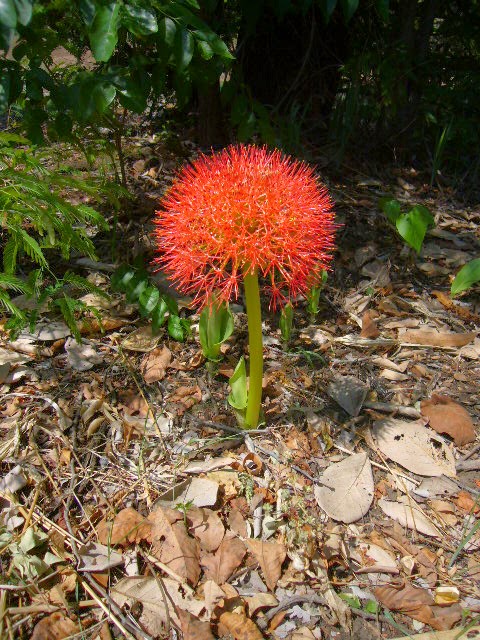
The bush has come alive with wild flowers.


Wild Ginger
Fireball Lily
The early growing season has not been without problems, either too much or too little rain has resulted in average germination and replanting has been necessary in some areas: the ever present monkeys and baboons will help themselves to the tender shoots so this family have built a shelter to protect them from the weather whilst on monkey watch.
 

We continue to familiarise ourselves with the Malawian Lakeshore lifestyle, enjoying some water sports and swimming. We live well, although the supermarket is a 7 hour round trip there are fresh vegetables some fruit and fish available locally. Our drinking water comes from the lake; it is filtered passed through a UV device, boiled then refiltered.


Ian checking the water tanks a weekly routine on a Sunday morning  


On New Years Eve the rain was torrential and Ian spent some time pulling vehicles from ditches before welcoming 2015 at a party along the beach. Our normally quiet and deserted neighbourhood was lively and busy over the New Year. On New Year's Day the local children were all in party clothes and there was great excitement. Many Malawians celebrate their birthday on 1st January.

We are thinking about the Northern hemisphere winter and hope all is well.
T and I